Most engines rely on a cooling system to move heat away from the engine and out through a radiator or cooling fins. In most cars, this happens by circulating coolant through pipes, pumps and hoses. Over time, this system can face issues such as electrolysis, which needs to be controlled with anodes and corrosion inhibitors.
If the cooling system lacks anti-freeze (rust inhibitor), components can start to corrode. That corrosion leads to coolant leaks like the one pictured above. In this case, the engine had been neglected for some time, lost most of its coolant and eventually overheated and failed.
At Automotive Solutions Kauri, we test the anti-freeze concentration and pH during servicing so we can spot problems early. We also pressure test the cooling system to identify weak components that can be replaced cost‑effectively, helping you avoid the far higher cost of engine replacement.
If you’d like us to check your cooling system or test your anti-freeze levels, get in touch with the team.
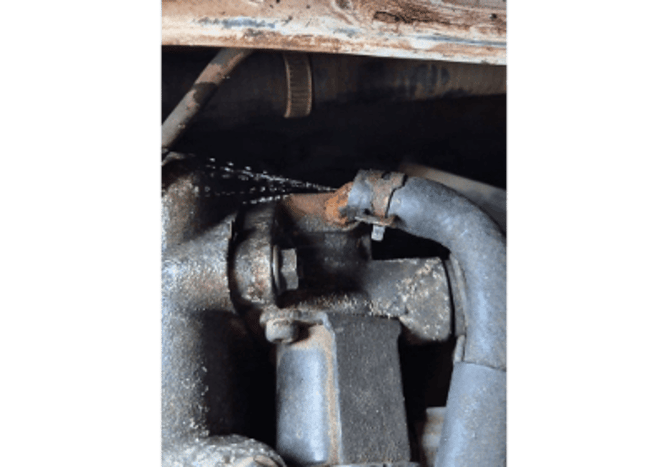
Close‑up of a car engine showing coolant spraying from a corroded hose fitting. The rusted clamp and surrounding metal parts indicate a leak caused by lack of anti‑freeze protection.